

Hydronic Snowmelt Systems: A Smarter Approach to Heated Driveways and Walkways
Winter weather brings snow, ice, and the ongoing challenge of keeping driveways, sidewalks, and entrances clear. Hydronic snowmelt systems offer a practical solution, but successful installations begin with proper planning beneath the concrete.
For contractors and builders, installing a snowmelt system involves more than simply placing tubing beneath a driveway or sidewalk. Insulation, tubing layout, compressive strength, and system design all play important roles in long-term performance.
That’s where Creatherm radiant floor panels can help simplify the installation process.
What Is a Hydronic Snowmelt System?
A hydronic snowmelt system circulates a heated fluid, typically a water and glycol mixture, through tubing installed beneath an outdoor surface.
As heat transfers upward through the concrete or other properly designed surface, it helps melt snow and ice, reducing the need for manual snow removal and chemical deicers.
Common applications include:
- Residential driveways
- Sidewalks and pedestrian walkways
- Front entrances and steps
- Commercial building entrances
- Parking garages
- Helipads
- Loading areas and other engineered outdoor surfaces
Hydronic snowmelt systems can be especially valuable in areas where snow accumulation, ice formation, or repeated snow removal creates maintenance challenges.
Why Insulation Matters in Snowmelt Applications
One of the most important considerations in a snowmelt installation is controlling where the heat goes.
Without appropriate insulation beneath the system, a portion of the heat produced can be lost into the ground rather than transferred toward the surface.
Properly specified insulation helps reduce downward heat loss and supports more efficient operation.
However, insulation selection should never be based on R-value alone.
Contractors should also consider the expected surface loads, compressive strength, slab design, drainage, and project-specific engineering requirements.
A residential sidewalk and a driveway supporting vehicle traffic may require different insulation specifications.
Simplifying Snowmelt Tubing Installation With Creatherm
Traditional hydronic tubing installations using flat foam insulation often require additional measuring, positioning, and fastening.
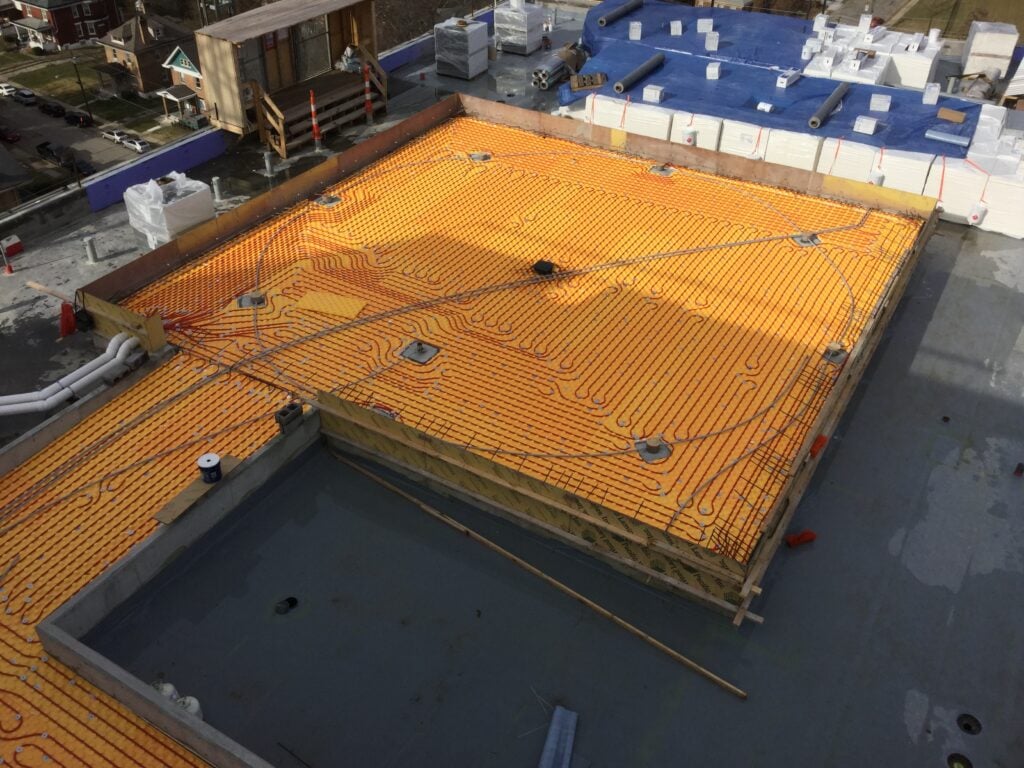
Creatherm’s molded EPS radiant floor panels combine insulation and a tubing placement grid into one interlocking system.
Each 2′ × 4′ panel features a molded grid with tubing positioning points at 3-inch increments, allowing contractors to follow the spacing specified for their project.
Advantages of the Creatherm installation system include:
- Faster tubing installation: The molded grid reduces the need for separate tubing fastening methods.
- Consistent tubing placement: Built-in positioning points help installers maintain the specified layout.
- Reduced installation labor: Less time spent measuring, securing, and repositioning tubing.
- Interlocking panels: The panel design helps create an organized installation surface.
- Multiple product options: Contractors can evaluate different panel configurations based on project requirements.
For contractors working against concrete placement schedules, simplifying tubing installation can make a meaningful difference.
Choosing the Right Panel for a Snowmelt Project
Not every radiant floor insulation panel is suitable for every snowmelt application.
Creatherm manufactures several EPS panel options, including the S45 and U45, which offer different thicknesses and compressive strength characteristics.
The S45 provides approximately 36 PSI compressive strength, while the U45 is designed for higher-load applications, with a compressive strength of approximately 45 PSI.
For vehicle-bearing driveways, commercial entrances, and other demanding installations, the project designer should confirm that the selected insulation meets the applicable loading and structural requirements.
A higher compressive strength rating alone does not guarantee suitability for a particular driveway or commercial installation. Long-term loading and the complete pavement assembly must also be considered.
Creatherm can provide product specifications to help contractors and engineers evaluate the available options.
Plan the Complete System Before Installation
A successful snowmelt installation requires coordination between the hydronic designer, concrete contractor, and installation team.
Important considerations include:
Tubing spacing and circuit layout: These should be designed to deliver the required surface heating performance under local winter conditions.
Heat source and controls: The boiler or other heat source, pumps, mixing equipment, and controls must be properly sized for the system.
Snow and moisture sensors: Automated controls can help operate the system when weather conditions require snow melting.
Drainage: Meltwater needs an appropriate drainage path to help prevent refreezing outside the heated area.
Concrete design: Reinforcement, slab thickness, joints, surface loads, and tubing protection must be coordinated with the project requirements.
Addressing these details before installation helps avoid unnecessary changes once construction is underway.
Real-World Application: Creatherm S45 Driveway Snowmelt Installation
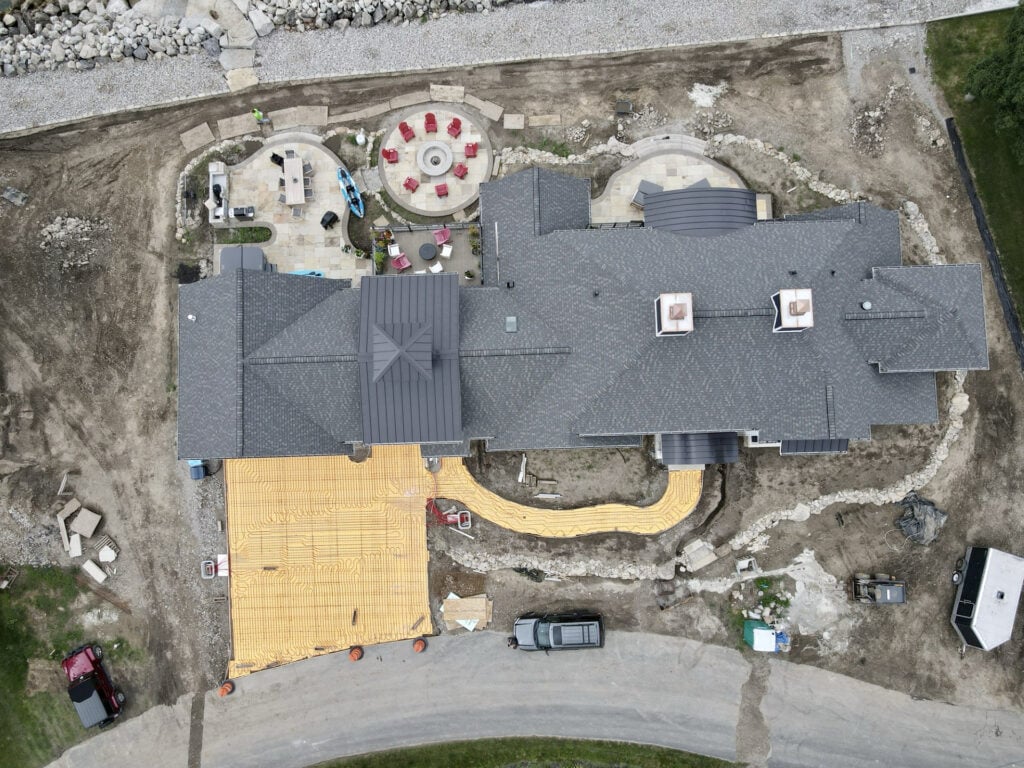
Creatherm panels have been used in residential snowmelt applications, including a driveway project completed by Bott Mechanical Company in Wabash, Indiana.
The project incorporated Creatherm S45 panels with ¾-inch PEX tubing as part of the driveway’s hydronic snowmelt installation.
This project demonstrates how Creatherm’s molded tubing grid can be incorporated into an outdoor snowmelt application.
Get Ready for Winter With Creatherm
Whether you’re planning a heated residential driveway, a pedestrian walkway, or a commercial snowmelt installation, proper preparation starts beneath the surface.
Creatherm radiant floor panels are designed to make hydronic tubing installation faster, easier, and more organized.
With multiple panel options and an interlocking molded tubing grid, Creatherm helps contractors reduce installation labor while following the project’s specified tubing layout.
FAST. EASY. SAVES LABOR. JUST WALK-IT-IN.
Planning a Hydronic Snowmelt Project?
Contact Creatherm to discuss panel specifications, product availability, and distribution opportunities.
Visit Creatherm to learn more about our radiant floor panel systems.