
Should Radiant Floor Heating Be Left On Year-Round? A Hydronics Industry Perspective
In hydronic radiant design, one of the most common questions from homeowners, builders, and facility managers alike is whether a system should be shut down during warmer months or maintained continuously throughout the year.
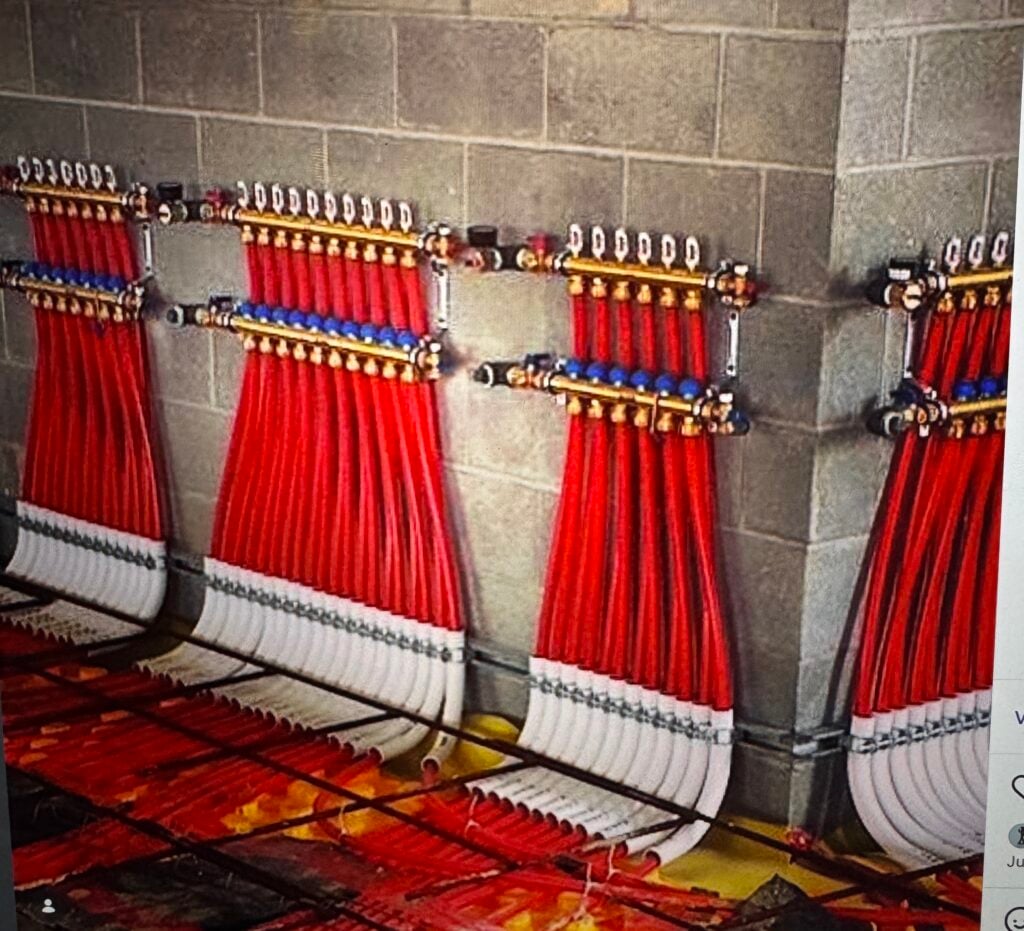
From a strictly technical standpoint, the answer is less about a simple “on or off” decision and more about how the system is managed relative to climate, building use, and thermal mass. Across North America, industry best practices consistently point toward maintaining stability rather than introducing wide temperature swings, particularly in systems embedded in mass.
Radiant Heat Is a Steady-State System, Not a Cycling System
Unlike forced air equipment, hydronic radiant systems are engineered to operate as low-temperature, high-mass, steady-state systems. Whether installed in a residential slab, a lightweight panel system, or a commercial concrete pour, the defining characteristic is the same, they condition mass first, and air second.
Because of this, aggressive on/off cycling introduces inefficiencies:
- Long recovery times in high-mass slabs
- Increased energy input to reheat cooled structures
- Reduced comfort due to lag in system response
Industry guidance consistently supports the use of:
- Outdoor reset controls
- Continuous circulation (in many designs)
- Gradual load adjustment rather than abrupt shutdown
Thermal Mass Drives Operational Strategy
In slab-on-grade construction, gypcrete systems, and other high-mass assemblies, the floor effectively becomes a thermal storage medium. Once that mass is brought to temperature, maintaining it requires significantly less energy than reheating it from a cold start.
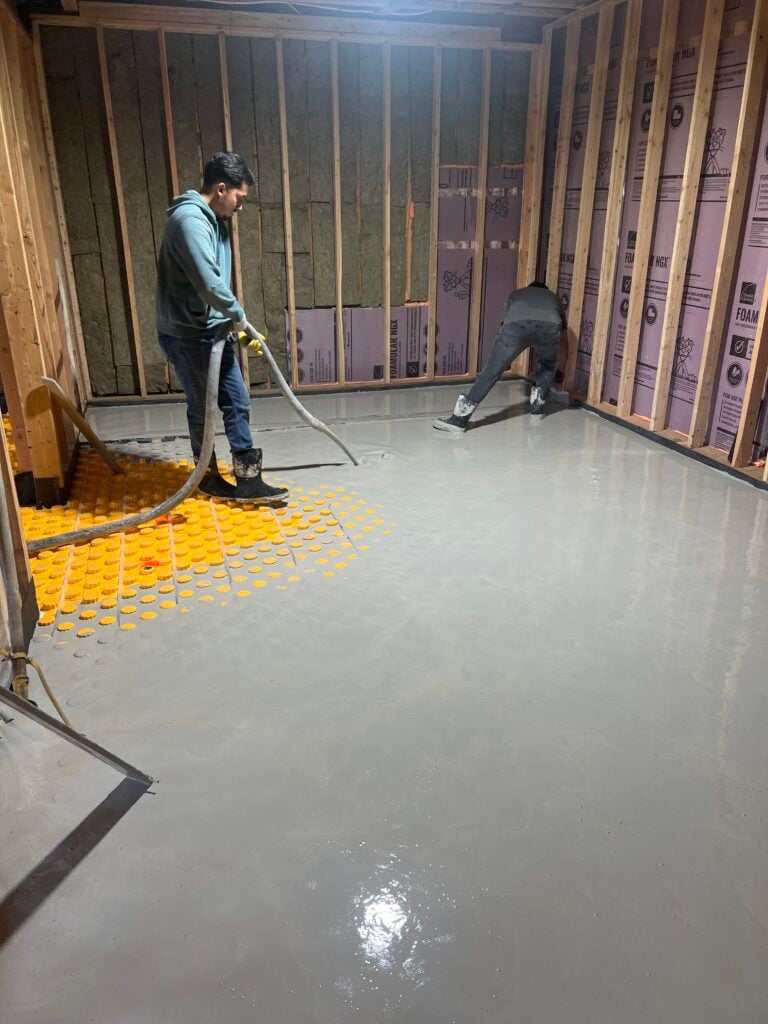
For this reason, in colder and mixed climates like the Midwest, Northeast, and much of Canada the common field practice is to:
- Maintain a baseline slab temperature
- Reduce supply water temperature during shoulder seasons
- Avoid complete system shutdown except for maintenance
This approach minimizes:
- Thermal shock to the system
- Energy spikes during recovery
- Comfort complaints associated with cold floors and delayed heat
Climate and Building Use Dictate the Details
While the physics remain consistent, application varies by region and building type.
Residential Homes
In primary residences, especially slab-on-grade construction, systems perform best when allowed to modulate continuously. Setback strategies may be applied, but deep setbacks or full shutdowns often result in diminished performance and longer recovery cycles.
Barndominiums, Shops, and Agricultural Buildings
These structures typically feature large slabs, high ceilings, and intermittent occupancy patterns but they also benefit significantly from temperature stability. Maintaining a minimum slab temperature helps:
- Control condensation
- Protect equipment and materials
- Reduce extended recovery times
Commercial and Institutional Buildings
In schools, offices, and retail environments, radiant systems are usually integrated into broader mechanical strategies. Here, systems are rarely “left on” but instead:
- Operate under building management systems (BMS)
- Utilize night setbacks and outdoor reset
- Maintain critical zones at consistent temperatures
Animal Care and Specialty Facilities
In veterinary clinics, kennels, and shelters, radiant systems are often operated continuously at low levels to support:
- Consistent surface temperatures
- Improved sanitation conditions
- Reduced stress on animals
The Role of Modern Controls
Advancements in controls have reinforced the industry shift away from binary operation. Today’s hydronic systems are typically designed around:
- Outdoor reset curves that automatically adjust water temperature
- Zoning strategies that match load to occupancy
- Variable-speed pumping for improved efficiency
These tools allow systems to remain active while significantly reducing energy consumption during low-load periods—eliminating the need for full shutdown in many cases.
Best Practice: Maintain a Baseline, Not a Binary
Across a wide range of applications and climates, the prevailing industry approach can be summarized as follows:
Radiant systems perform best when maintained at a consistent baseline temperature and allowed to modulate with demand, rather than being fully shut down and restarted.
This does not imply full-capacity operation year-round. Instead, it reflects:
- Reduced set points during off-peak conditions
- Continuous but low-level operation in mass systems
- Strategic shutdown only where climate and usage justify it
Final Takeaway
Hydronic radiant heating is fundamentally different from conventional HVAC systems, and it should be operated accordingly. The combination of thermal mass, fluid-based heat transfer, and modern control strategies favors consistency over interruption.
For designers, contractors, and building owners, the goal is not simply to decide whether the system is “on” or “off,” but to ensure it is operating in alignment with the building’s thermal characteristics and occupancy demands.
When approached this way, radiant systems deliver what they are known for across North America:
exceptional comfort, high efficiency, and long-term performance.